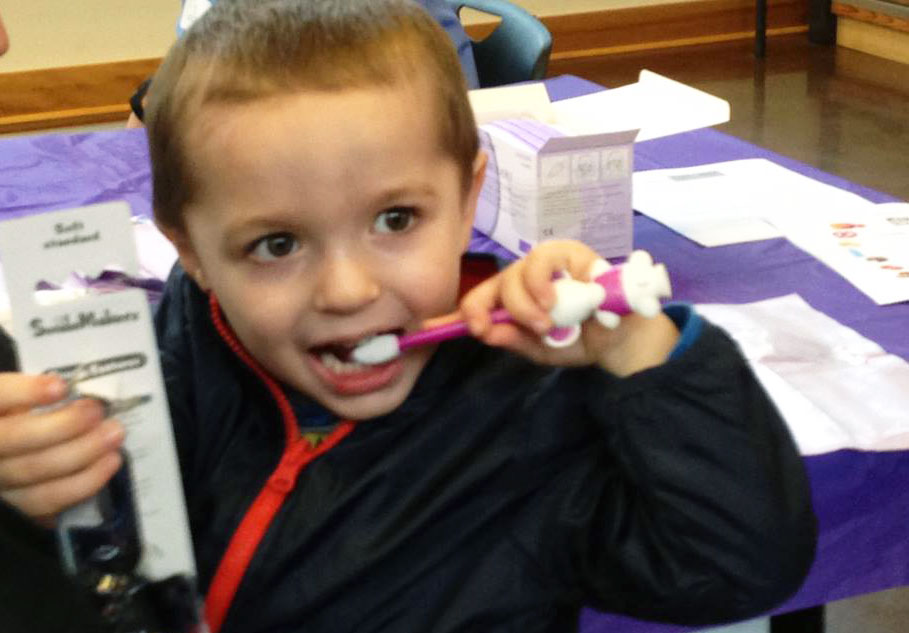
The sooner children begin getting regular dental checkups, the healthier their mouths will stay throughout their lives. Early checkups help prevent cavities and tooth decay, which can lead to pain, trouble concentrating and other medical issues. Youngsters with healthy teeth chew food easily, learn to speak clearly and smile with confidence.
The American Dental Association and the American Academy of Pediatrics say that every child should visit a dentist by age 1 – or as soon as the first tooth appears. This “well baby visit” teaches parents and caregivers how to care for their children’s teeth and help them remain cavity-free.
For example, pediatric dentists see many young patients with cavities that came from falling asleep with a bottle of milk or juice. The dentist can tell the parent or caregiver:
- Why this causes decay
- The importance of encouraging children to drink milk, water and juice from a cup as they approach their first birthday
- How to brush young teeth.
Dentists also encourage mothers to stop on-demand nighttime breastfeeding, after the child’s first teeth come through.
Tooth decay is the most common chronic disease among children in the United States. The Centers for Disease Control and Prevention (CDC) reports that more than 40 percent of children have decay by the time they reach kindergarten.
Here in Washington State, nearly 60 percent of elementary school-age children suffer from preventable dental decay. More than one in five have cavities in at least seven teeth.
The Center for Pediatric Dentistry provides gentle, expert care to all children through age 18. Specialty clinics offer comprehensive services for children with special needs and those who have medical problems, such as cancer.
For more information or to make an appointment, call 206-543-5800.